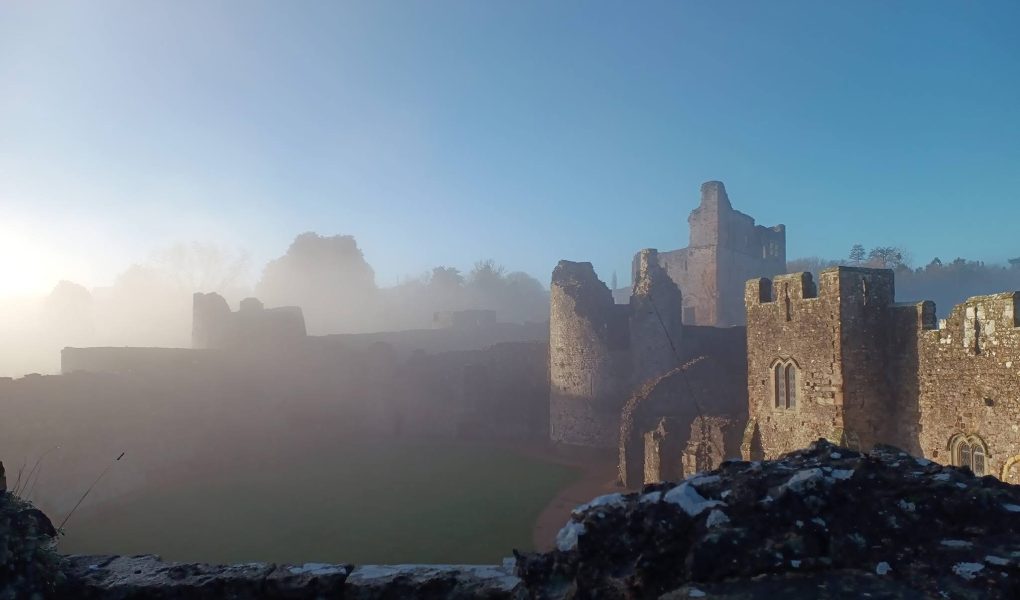
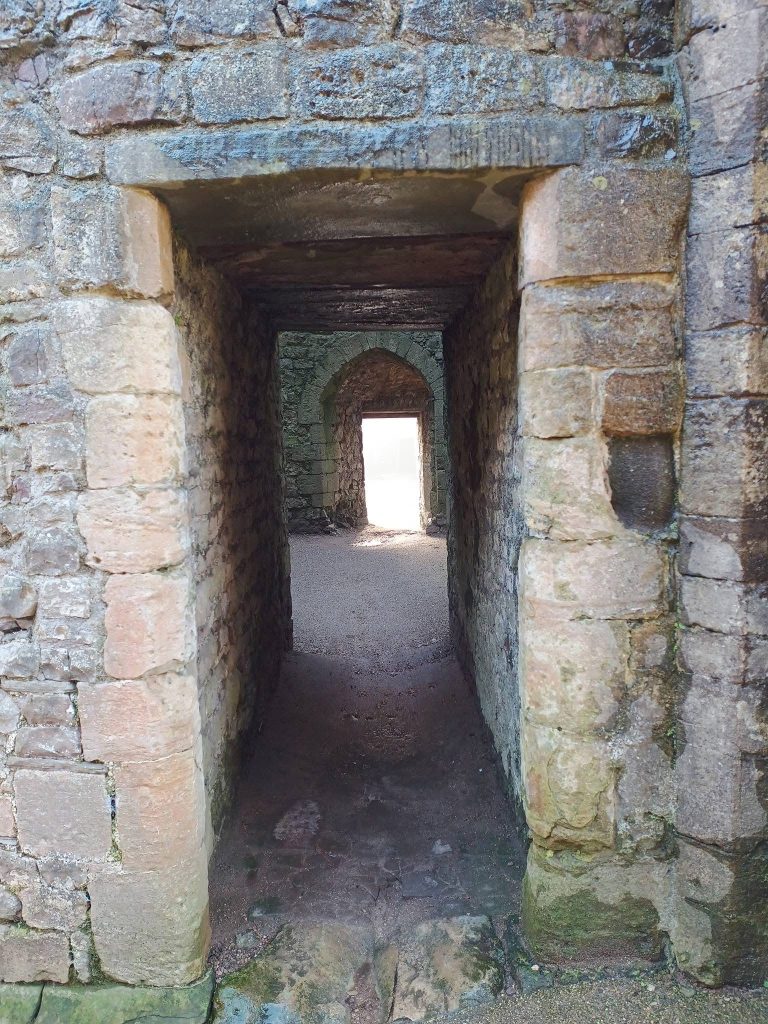
On a very foggy December morning, I went to visit Chepstow Castle. Often described as one of the great castles of Wales, it lies, unusually for a castle, at the bottom of the town centre. Usually, a castle is erected on a high point. The castle is the oldest post-Roman stone fortification still standing in all of Britain. It also has the oldest surviving castle door in Europe, which is still able to be seen by visitors, even though it’s behind a rope to protect it.
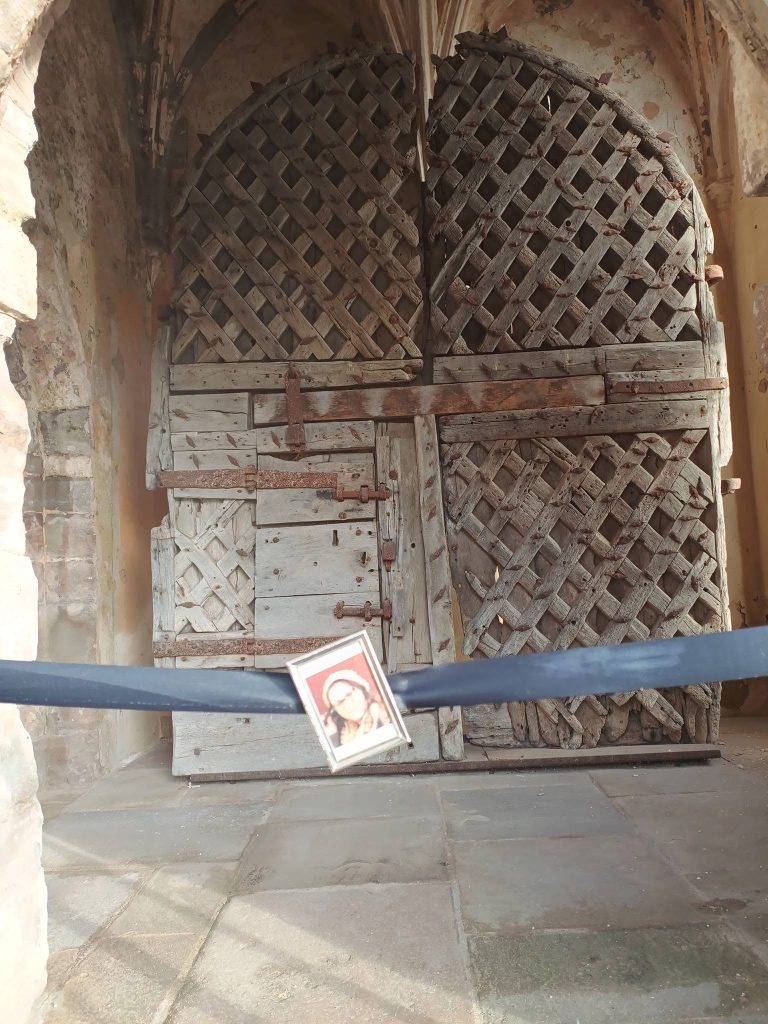
Building was started in 1067 by Earl William fitz Osbern, close friend of William the Conqueror, making it one of the first Norman strongholds in Wales, and it passed through various illustrious hands until its decline after the civil war.
It wasn’t originally called Chepstow Castle. It was named Striguil, and was the southern-most of the Welsh marcher castles. It wasn’t until the 14th century that it took the name of the market town to the side.
While it is now a proud Welsh landmark, it was used by the Normans to conquer Gwent, the first independent Welsh region to be conquered by the Normans. Unusually, it is not a well-fortified castle, it doesn’t have a strong keep and it is not constructed in the traditional concentric layout. But it’s location right on the River Wye means that at times of siege, provisions could be brought to the castle by boat, which made any sieges quite fruitless.
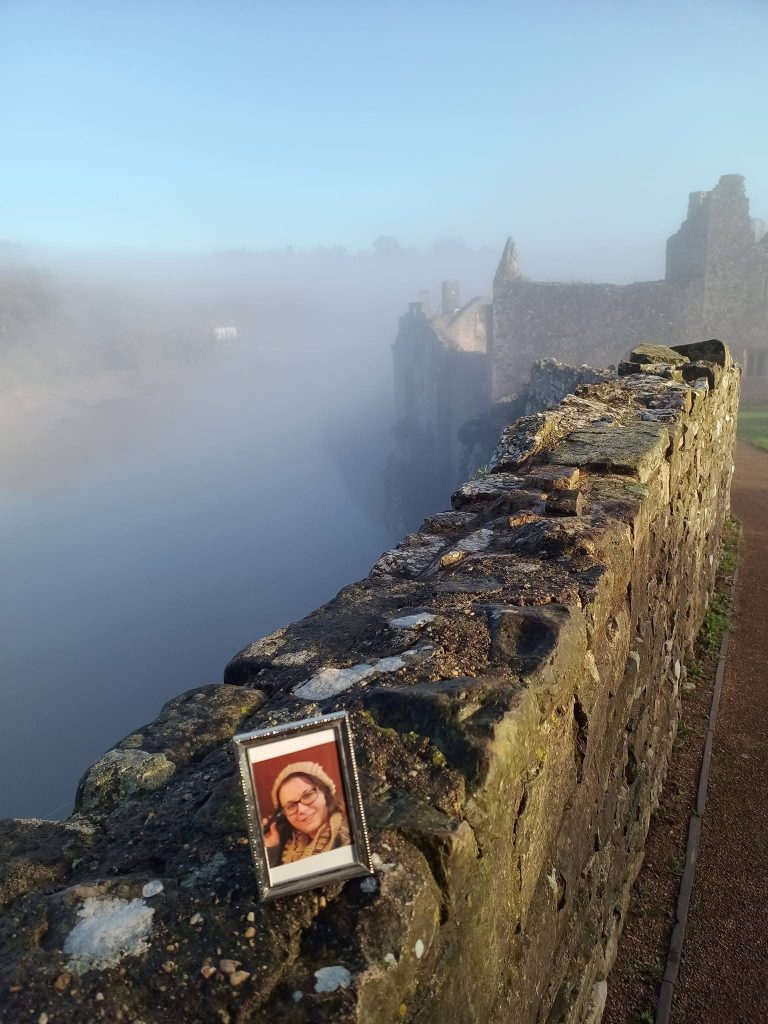
In the 1190s, the castle fell into the hands of William Pembroke, who added fortifications which included building the main gatehouse and the curtain wall to the unprotected east side, which included projecting towers with arrow slits affording covering fire to the fighting forces on the ground: Another first that became the standard of future medieval castles. William continued to improve both the defences of the castle and the living accommodation. One interesting thing to note is that on the Welsh side, there are no windows, but the English side has plenty to allow light in.
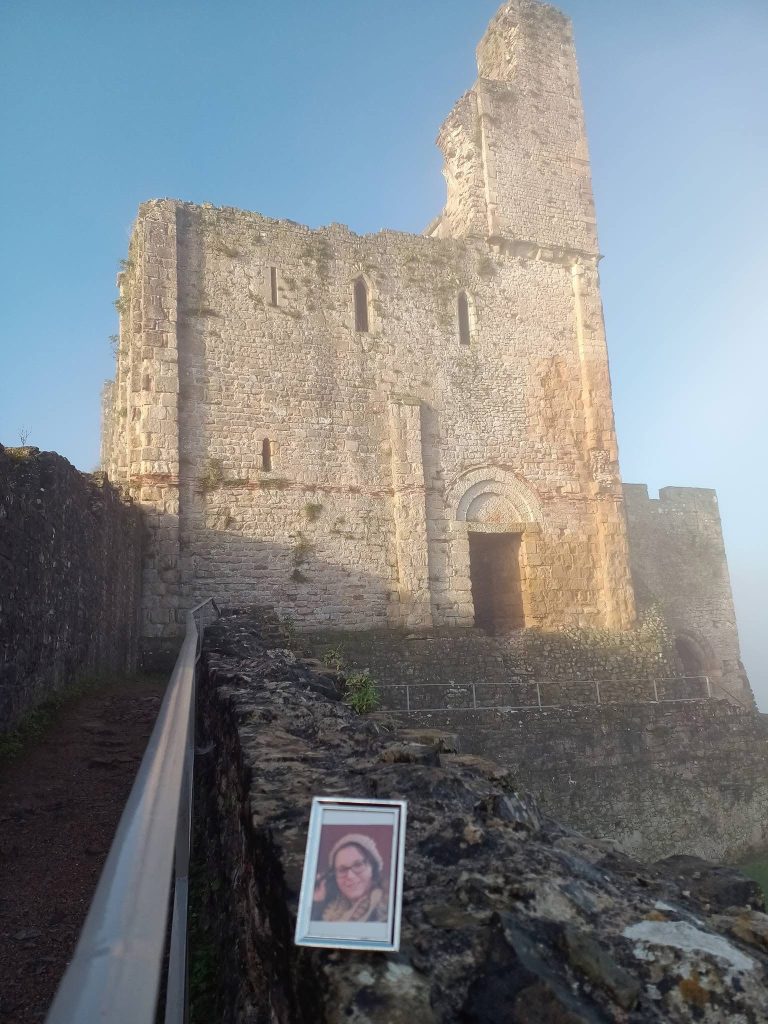
Chepstow Castle was largely unscathed by the Welsh rebellion of 1403, probably because of the increased fortifications and undoubtedly assisted by the presence of the large garrison, including 60 archers. The castle continued to change hands and had a variety of remodeling work done, mainly to the accommodation areas, but it was largely untroubled by battle until the English Civil War. Initially held by the royalists, the castle fell into the hands of the parliamentarians. After that, it was strengthened and was used to house political dissidents.
After all of the proud history over hundreds of years, Chepstow Castle was left to fall into ruin. Eventually, the current owners, the Beauforts, sold it to the state in 2014. That’s when the castle entered a new phase and new life. As a tourist destination. After many years of being a historical attraction and filming venue, in 1984, the castle fell under the ownership of CADW, who still run the castle to this day. For those interested, films and TV series include Ivanhoe, Robin of Sherwood and Doctor Who: The 50th anniversary episode, no less.
A few things to be aware of when you visit Chepstow Castle. They don’t have their own car park. But there is a public car park at the foot of the castle and several more in Chepstow. While not free, the price isn’t horrific. There are no toilets on site, but there are public toilets in the car park at the foot of the castle. The castle is mostly accessible to people with mobility issues, but there is a bit of a climb up a short slope from the car park and the castle is built on a slope. Some parts are only accessible by stairs.
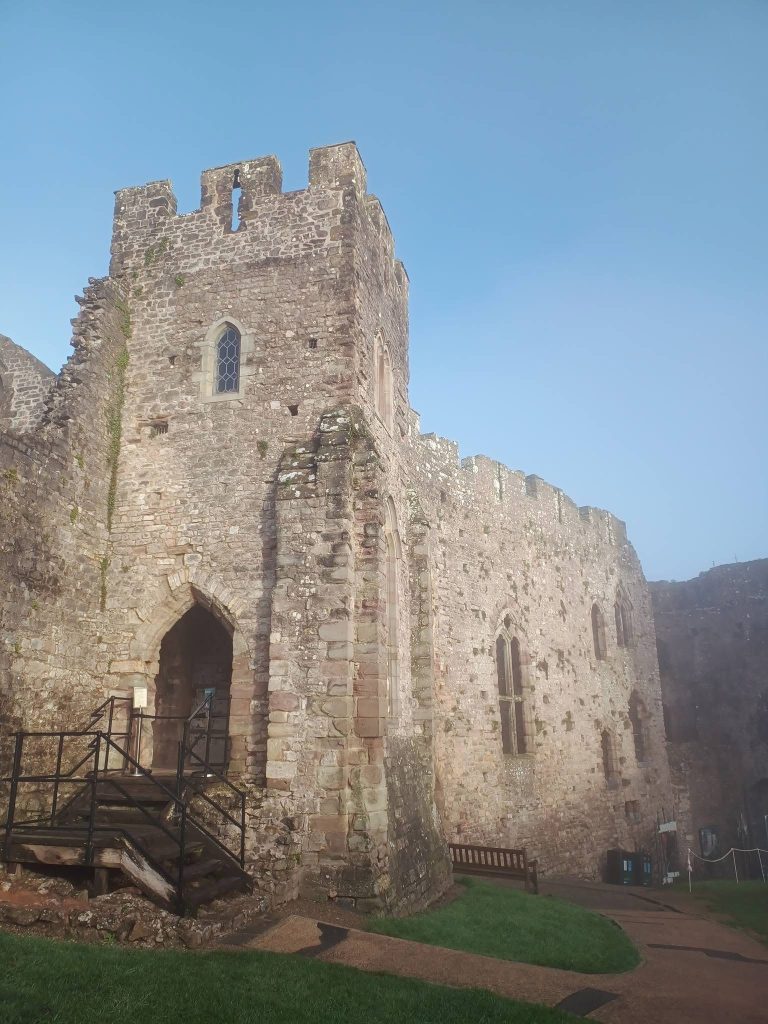
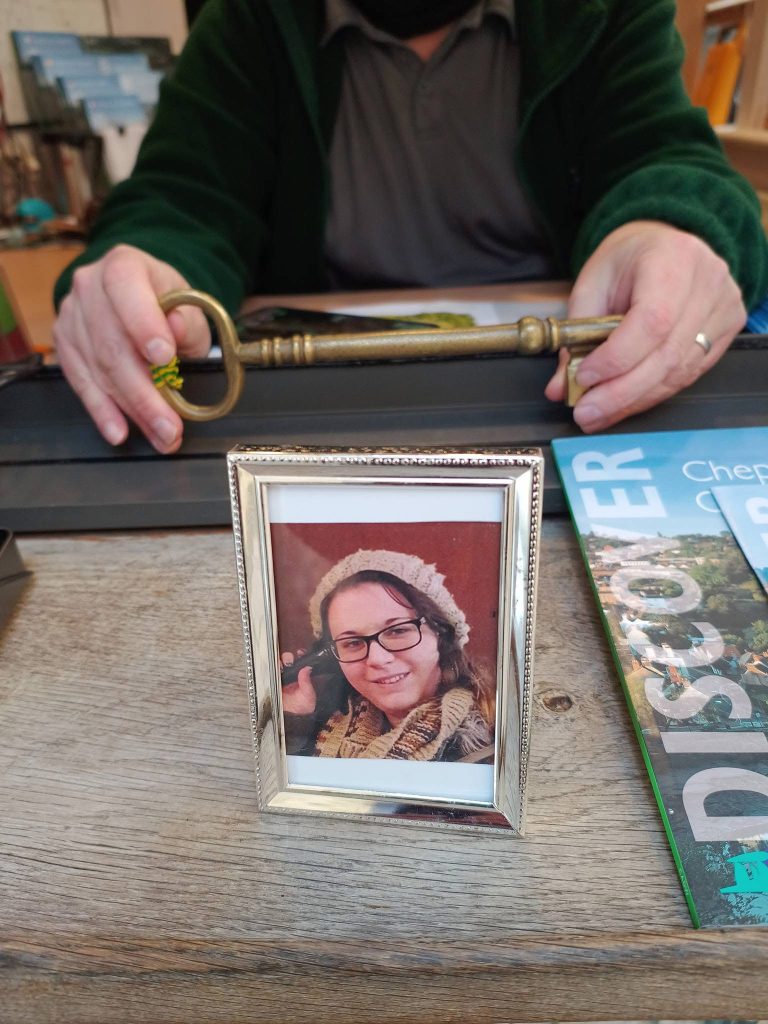
I arrived on a very foggy morning in December just before the castle doors were opened. I was expecting it to be opened with a modern yale key and a few bolts, but, despite the current doors being built in the 60s, the key looks just like the sort of big, old fashioned key you would expect to have seen hundreds of years ago. I was fascinated by it.
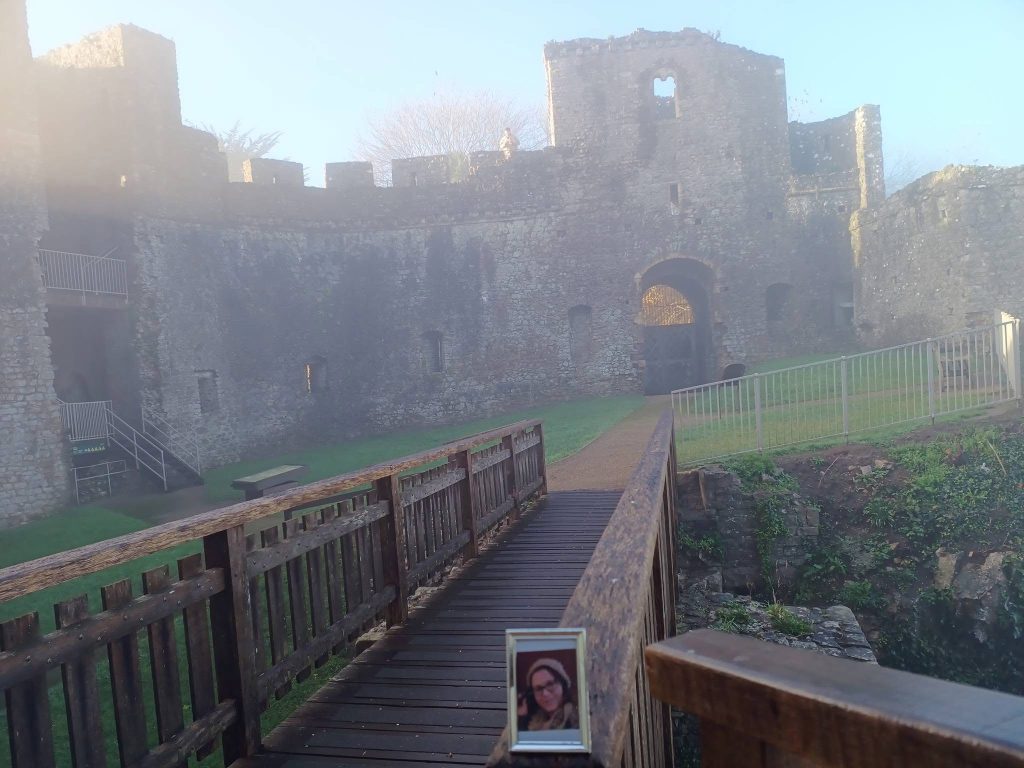
When you get inside, it’s a lovely castle. It doesn’t look particularly big until you start to move up… And up… And up. Because it’s a terraced castle it goes back a long way. Just how far is surprising. It’s only when you reach the back end that you appreciate the size of the building.
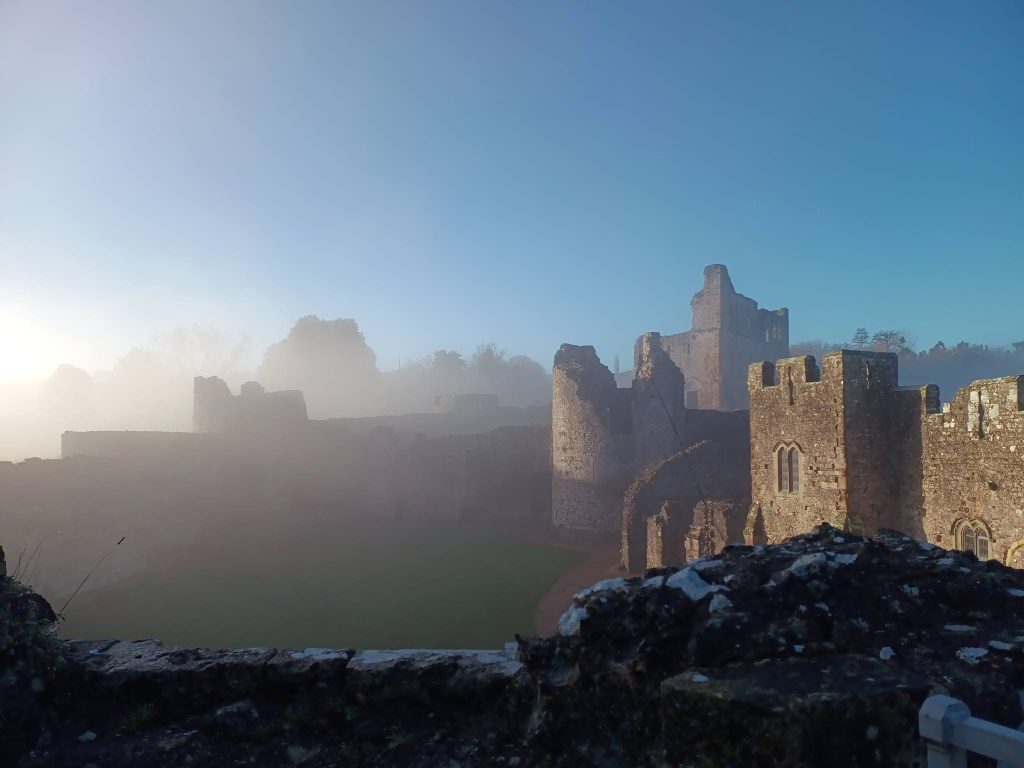
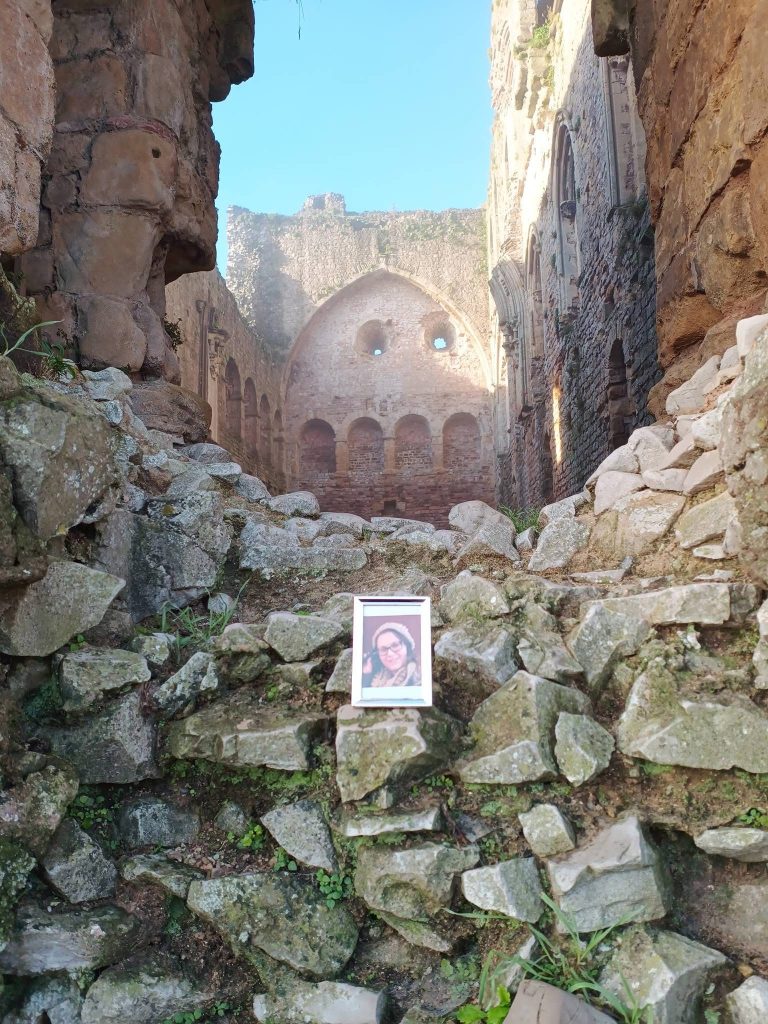
Most of the castle is in a state of ruin, but you can easily imagine what it must have been like in its heyday, and because of the layout, it must have felt like a small village once inside. As mentioned, the windows are all on the English side and when the fog isn’t surrounding the site, the view is of the tidal river and England on the other side. You can actually walk across the bridge just slightly further than the car park and be in England, then cross back to Wales within a minute. Because it’s a tidal river, it’s often just brown sludge, so don’t expect beautiful blue water flowing past. I have a bird identification app on my phone and using that, discovered falcons flying over. Lovely.
The Marten Tower is worth the climb. You have a great view of the castle from a different perspective. The stone steps are tricky and there are a lot of them, so best not attempted if you aren’t too stable on your feet. I always find down harder than up. Parts of the inner walls are open to climb up to and walk along too. They are much easier to climb. There are side rooms to explore, mostly on the “English” side and you can see down to the strip of gardens that were planted next to the castle wall.
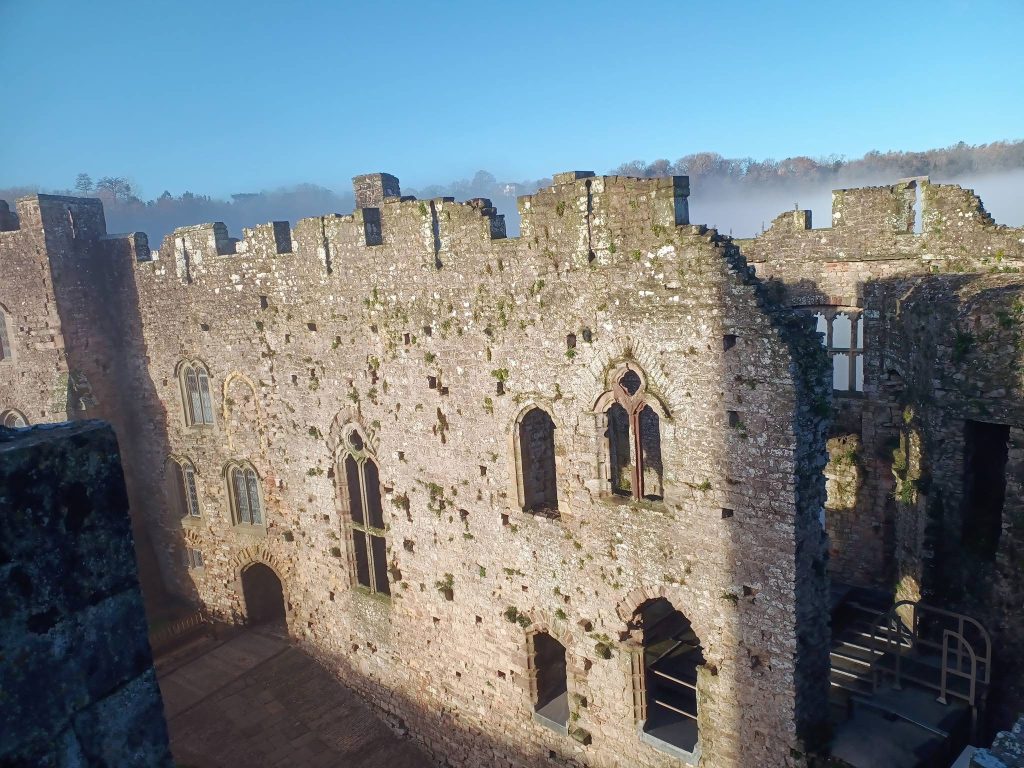
All in all, it’s a castle worth visiting. Not just because it’s a history lesson and quite unique, but it’s a beautiful building. I went many years ago with my stepsons when they were young enough to enjoy playing knights and they had a blast. So whether you enjoy make-believe, architecture or history, or just fancy a quiet wander, Chepstow Castle is one for the list.