
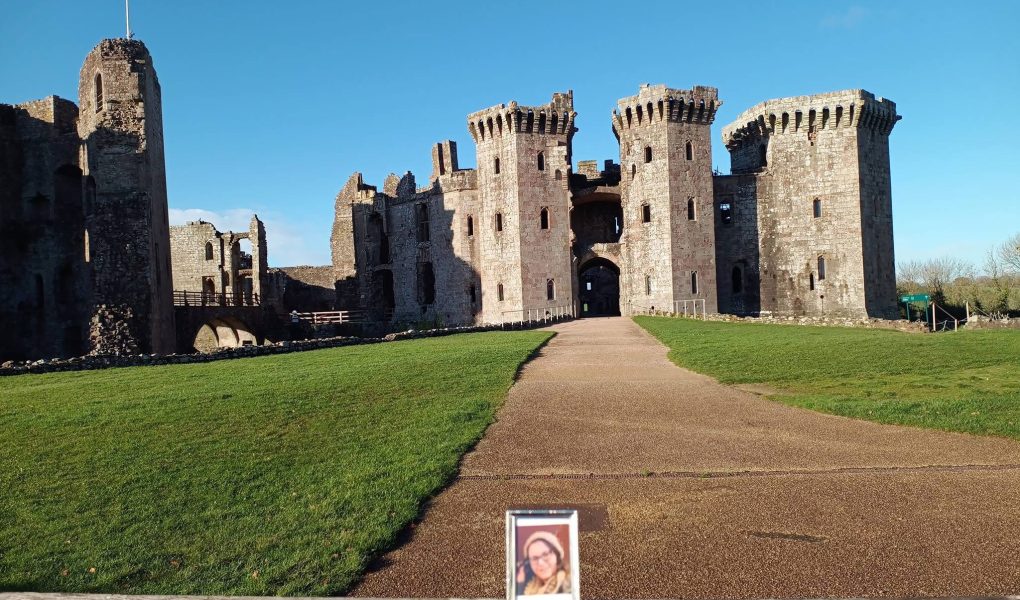
A late Medieval castle, Raglan Castle has been called “the grandest castle ever built by a Welsh man”. Most grand Welsh castles were built by the Normans or English during times of war and conquest. This was built as a statement of power and wealth after the turbulent war years were over. It was built on the site of a previous motte and bailey castle. The moated Great Tower is still possibly the most striking part the castle. It was built by Sir William ap Thomas, the ‘blue knight of Gwent’ and erected in 1435. Sir William had fought alongside Henry V at Agincourt in 1415 and had likely been granted lands and favours in return for his bravery and loyalty. Two marriages to wealthy and powerful heiresses certainly helped.
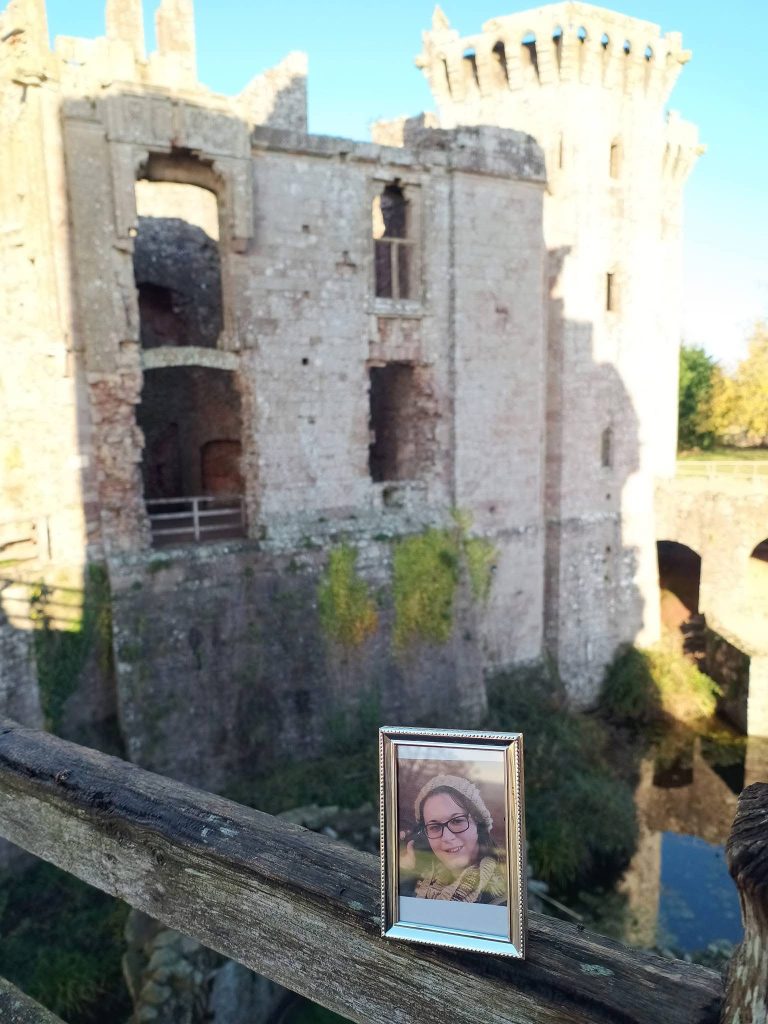
Work continued throughout Raglans history, as is usual for great castles. His son Sir William Herbert, Earl of Pembroke, the first Welshman to be made an earl, created the gatehouse with its “flared machicolations”, which are stone arches that allowed missiles to be pelted down onto attackers. He expanded the castle borders and improved the accommodation quarters and was responsible for the impressive gatehouse that you walk through when you visit to this day. Sir William Herbert was a prominent Yorkist and was executed once the Plantagenets lost the throne to the (ironically, Welsh) Tudors.
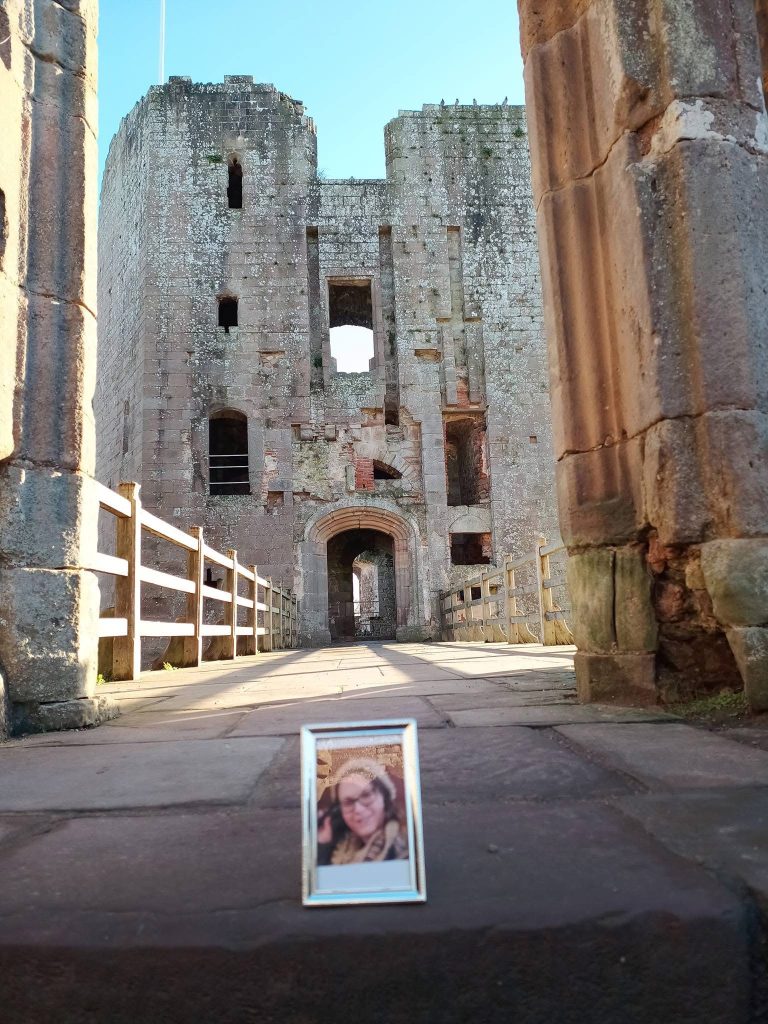
The castle eventually changed lines when it came to be inherited by a daughter of the family who married into the Somerset family, the Earls of Worcester. As the castle passed through the generations, it continued to be improved. William Somerset, the Earl of Worcester, who owned the castle during the late sixteenth century was responsible for one of the last major additions to the castle, the Great Hall. Various earls of Worcester who followed transformed Raglan Castle into a magnificent country seat and built a fashionable long gallery. It was all the rage to stroll up and down them to get some exercise in bad weather. I suppose they were the first gym.
During the first civil war, the Somersets were staunch royalists and ardent supporters of the king and catholic faith. Charles I visited at least twice and enjoyed his time at Raglan. It was becoming increasingly apparent that the royalist cause was in difficulty, and defences of the castle were strengthened, including forming a garrison of 800 men. Despite this, following one of the longest sieges of the civil war, it fell to parliamentary forces and an attempt was made to deliberately destroy the castle to prevent further use as a fortification. Unfortunately for them (and fortunately for us) the walls were stronger than they thought and less was destroyed than they hoped.
Although by the time that Charles II regained the throne, the family had regained a lot of its former lands and homes, including Raglan, the family prioritised other estates and Raglan was left to fall into ruin. They even used the stone from the castle to repair other properties. The fifth duke brought this to a stop in the mid 1700s, and Raglan Castle started to become a tourist attraction for people visiting the area. Although the Duke of Beaufort still owns Raglan Castle, it is under the management of, and maintained by Cadw. It is open to visitors for most of the year.
The first thing to note about visiting the castle is that your satnav might not be very accurate about taking you there. It is, however, very well signposted. Yes, I’m speaking from experience. Keep an eye out for the tourism signs. There isn’t a lot of available parking, but I was fortunate to visit during the week, so it was fairly quiet. Even luckier, it was a beautiful, bright day, although it had been raining a lot in the preceding days.
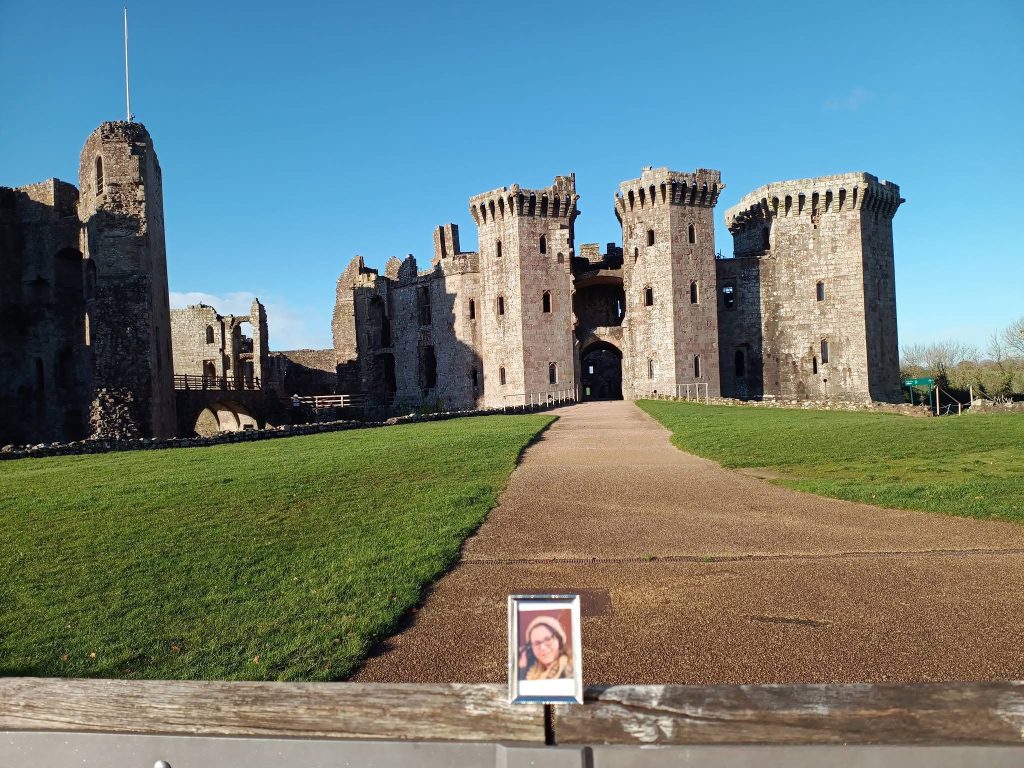
When you pull in, the castle stands magnificently in front of you and you know you’re in for a treat if you enjoy visiting castle ruins. Once you get through the visitors centre, it’s straight through the stunning gatehouse and into the castle. That’s when you realise that the front is all show. Once through the gatehouse, you are definitely in a ruin. But it’s a very impressive ruin indeed.
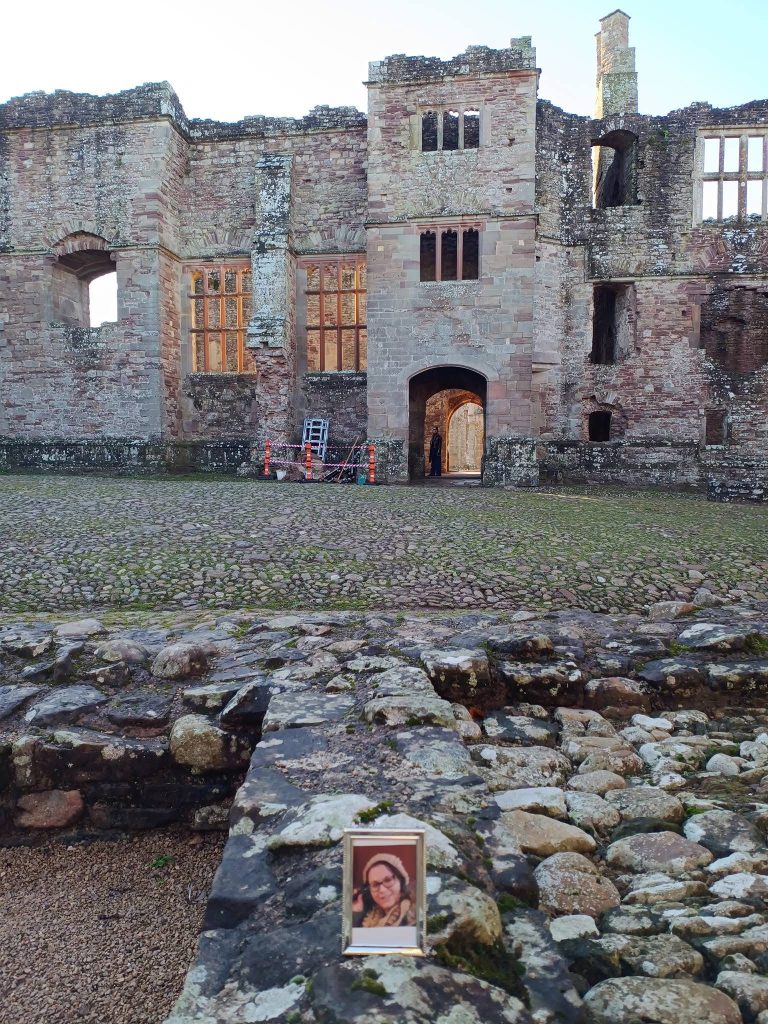
Be aware, if you have mobility issues, the courtyard of the main castle is down to very uneven cobbles. Also, the toilets are discreetly hidden to one side and the path to them gets very muddy and slippery when it’s wet. There are a lot of uneven areas to walk across, so if that presents a challenge, have a means of support.
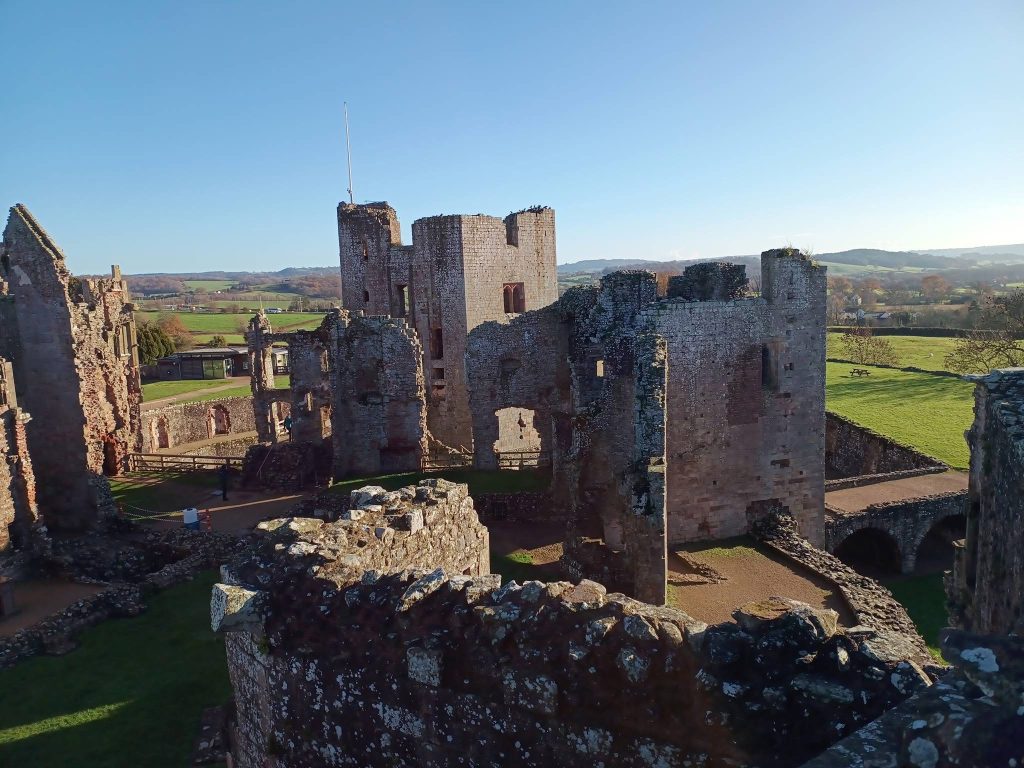
The scale of the castle is more easily appreciated from the inside. It may be a ruin, but enough of the walls survive to give you the impression of the building that was there hundreds of years ago. The more intact areas are to the rear and through to the left as you go in.
The grand staircase has been rebuilt, but not very sympathetically. It’s just concrete steps, but if you can imagine what it was like at the time, it must have spoken to the splendour of the castle. Most existing ones would have had the narrow staircases inside the walls to afford the occupants the strongest fighting position if hostile armies broke in and tried to fight their way up.
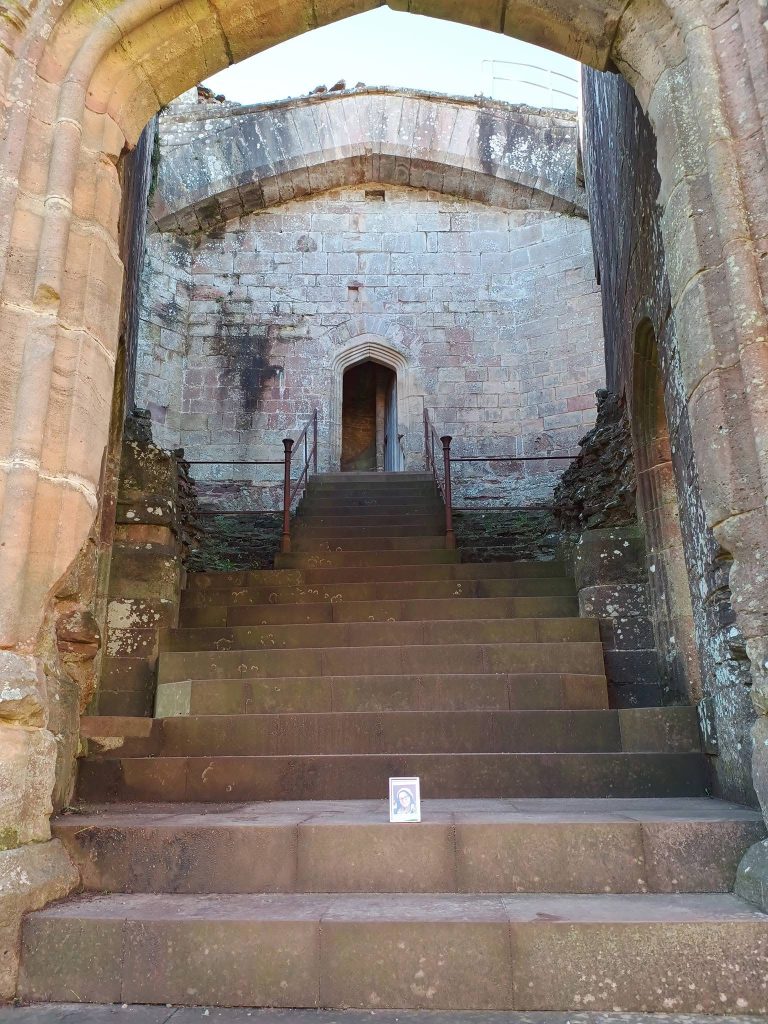
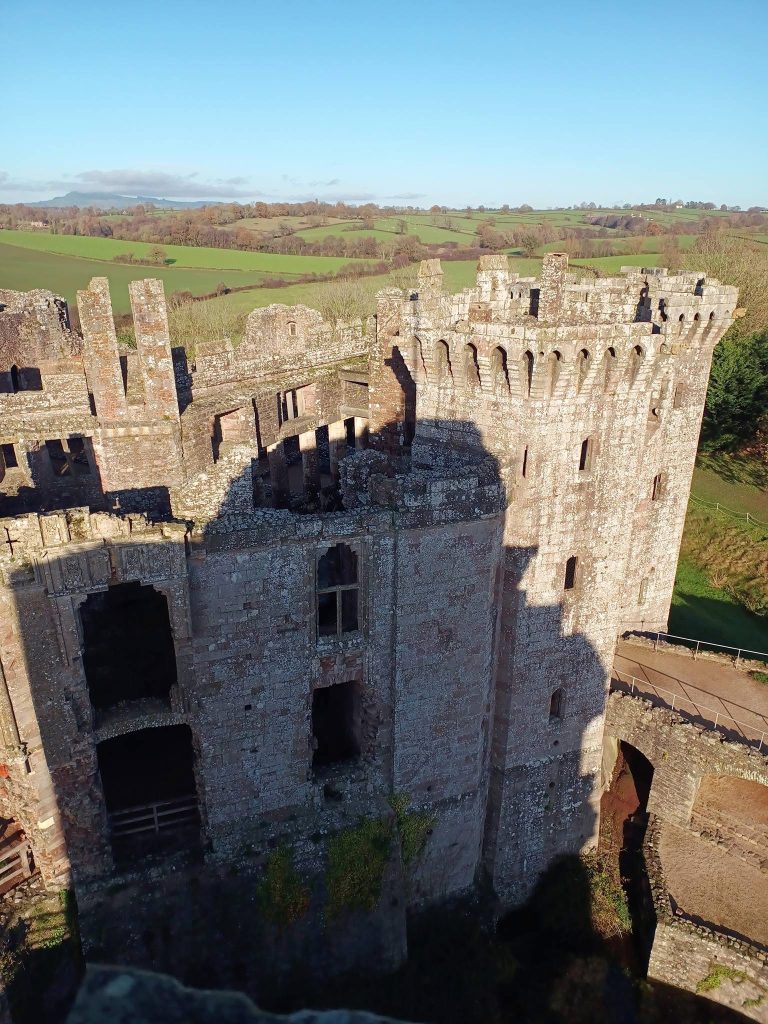
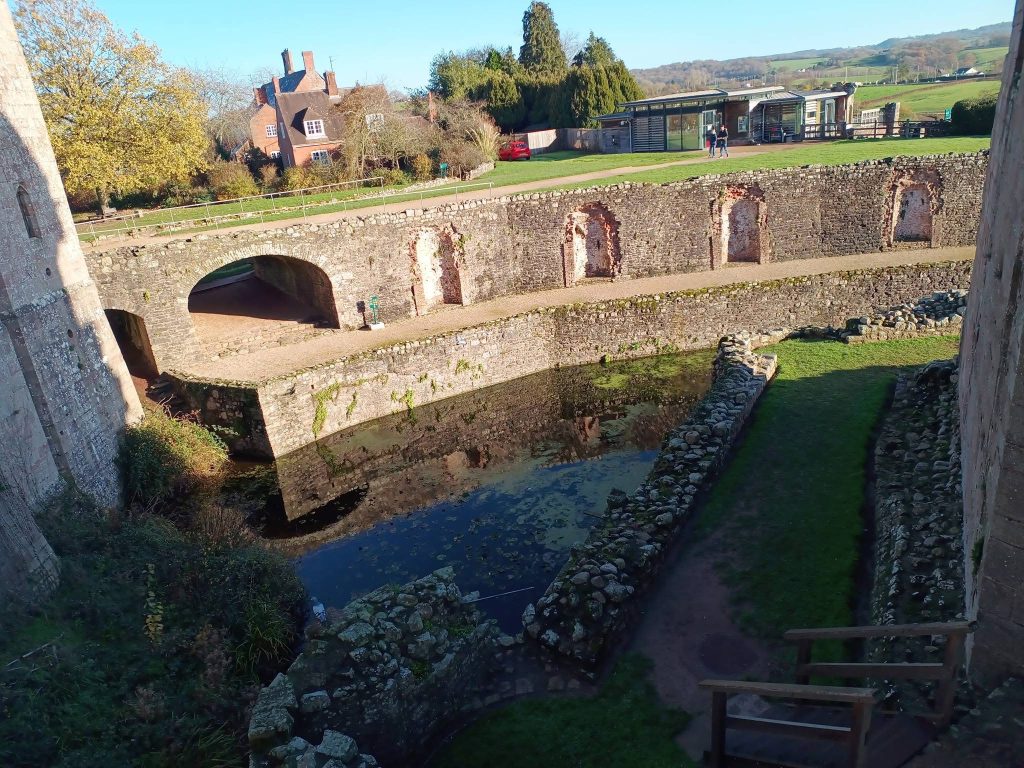
The beautiful and impressive moated tower is still the highlight for a visit. You don’t really notice at first, but it’s almost separated from the main castle. Again, if you do have mobility issues, be aware that you will be climbing steps to get to the top, but it’s certainly worth it for the view of the main castle and the moat surrounding the tower. Admittedly not all of the tower is still standing, but it’s still impressive. The moat is quite an interesting shape. Almost a triangle.
The surrounding grounds are well kept and the site is dog friendly, but dogs are expected to be on a lead and not climb into the towers. Water bowls are left out for them. Watch out for them around the moat though. It’s a long drop if they escape the lead and fancy a swim. There is a small gift shop on site selling snacks as well as the usual tourist memorabilia, but there is no restaurant, so if you plan on being out for the day, take a picnic with you. If the weather is good, there are plenty of areas in the grounds around the castle to enjoy your picnic and the view of the beautiful castle. If it’s typical Welsh weather, eat in the car. Either way, a visit to Raglan Castle is definitely one for castle enthusiasts.